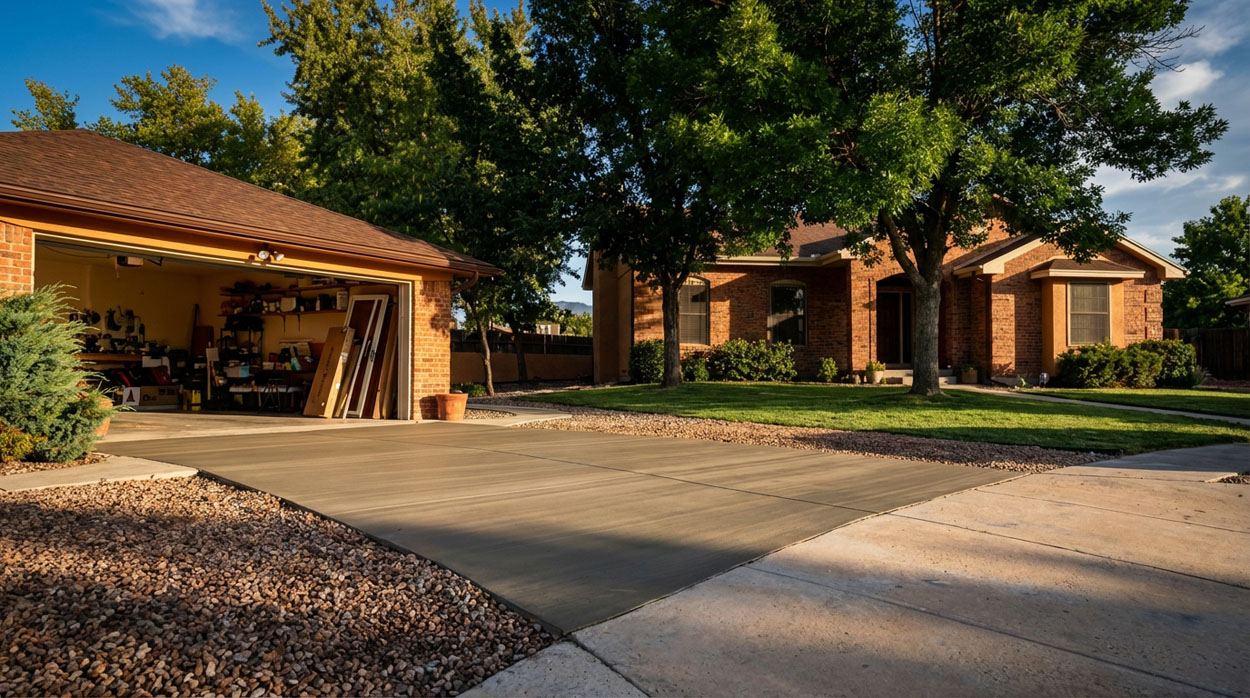
Driveways, patios, slabs, block walls, and decorative concrete from the Northeast Heights to the West Side — built for Albuquerque's soil, climate, and elevation.
Tell us about your Albuquerque project — we'll get back to you fast.
Albuquerque spans over 180 square miles with an elevation range of nearly 1,800 feet — from the Rio Grande valley floor at 4,900 feet to the Sandia Mountain foothills above 6,700 feet. That range means concrete work in Albuquerque is never one-size-fits-all. A driveway pour in the North Valley on clay-heavy alluvial soil requires a completely different sub-base approach than a patio slab in Sandia Heights on decomposed granite, or a commercial flatwork project on the volcanic West Mesa.
The majority of Albuquerque's housing stock is 25 to 75 years old. Neighborhoods built in the 1950s through the 1970s — including large sections of the Northeast Heights, Nob Hill, and the International District — have driveways and flatwork that are well past their service life. On the West Side, communities like Taylor Ranch, Paradise Hills, and Ventana Ranch were built in the 1990s and 2000s, and their concrete is now beginning to show the effects of two decades of freeze-thaw cycling and monsoon drainage stress.
Caliche is a constant across Albuquerque. This naturally cemented calcium carbonate layer sits below the surface throughout the metro area and must be broken through or removed for any deep concrete work. In the North Valley and South Valley, expansive clay soils add another layer of complexity — these soils can swell up to 10% when saturated during monsoon season, then shrink during the dry months, causing differential movement that cracks slabs and heaves flatwork. Our crew knows which soil conditions to expect in every part of the city and prepares the sub-base accordingly.
564,000+
Population
4,900–6,700+ ft
Elevation
$266,000–$346,000
Median Home Value
Founded 1706
Established
Caliche hardpan is ubiquitous across the city — an impenetrable calcium carbonate layer that must be broken through for proper footings and sub-base work
Expansive clay soils in the North Valley and South Valley swell up to 10% when wet, causing slab heave and differential cracking
1,800 feet of elevation change across the city means drainage, slope, and retaining wall requirements vary dramatically by neighborhood
Monsoon season (July–September) delivers roughly 50% of annual rainfall in intense downpours, making proper flatwork drainage slope critical
Freeze-thaw cycles from late November through mid-February cause surface spalling and cracking on improperly mixed or finished concrete
Over 300 days of sunshine and low humidity cause rapid surface drying during pours, increasing plastic shrinkage cracking risk
FEMA flood hazard areas cover 5,000+ acres near the Rio Grande — floodplain restrictions affect concrete work in valley neighborhoods
Driveway replacement in aging Northeast Heights neighborhoods (1950s–1970s homes)
New driveways and patios in active West Side subdivisions (Ventana Ranch, Ladera, Seven Bar)
Backyard patios and xeriscaped hardscape — Albuquerque's water conservation culture makes concrete outdoor living spaces more popular than grass
Retaining walls in the foothills and Sandia Heights where steep grades require engineered slope management
Commercial flatwork for parking lots, sidewalks, and building pads along major corridors
Block walls for privacy and property boundaries — common throughout the city's residential areas
Concrete repair and resurfacing on 1990s–2000s West Side homes now showing freeze-thaw wear
Albuquerque's most popular residential area, spanning from the 1950s–1970s tract homes near Menaul and Candelaria to newer executive homes near Academy and Tramway. Huge demand for driveway replacement on aging concrete and patio additions for outdoor living.
The fastest-growing part of Albuquerque, built on the volcanic West Mesa west of the Rio Grande. Homes from the 1990s onward — the oldest are now needing their first round of concrete repair or replacement. Caliche and volcanic basalt beneath shallow soils affect every pour.
Lush, agricultural character along the Rio Grande with large-lot homes, horse properties, and mature cottonwoods. High groundwater and clay-heavy alluvial soils make sub-base preparation and drainage engineering critical for every flatwork project.
Luxury custom homes at the base of the Sandia Mountains (6,700+ ft elevation). Rocky decomposed granite soil, steep terrain, and dramatic elevation changes mean retaining walls, sloped flatwork, and engineered drainage are standard requirements.
Walkable, eclectic neighborhood along the historic Route 66 corridor. Home ages run from the 1940s to 1960s — some of the oldest residential concrete in the city, with heavy demand for driveway and walkway replacement.
Unincorporated Bernalillo County south of the city, with older agricultural character and the most affordable housing. Older concrete infrastructure in significant need of replacement, and clay-heavy soils near the river present ongoing challenges.
Upscale homes near Kirtland AFB open space with Sandia Mountain views. Custom properties with significant flatwork and decorative concrete opportunities. Rocky soil conditions at higher elevations.
Residential concrete driveway installation in Rio Rancho, NM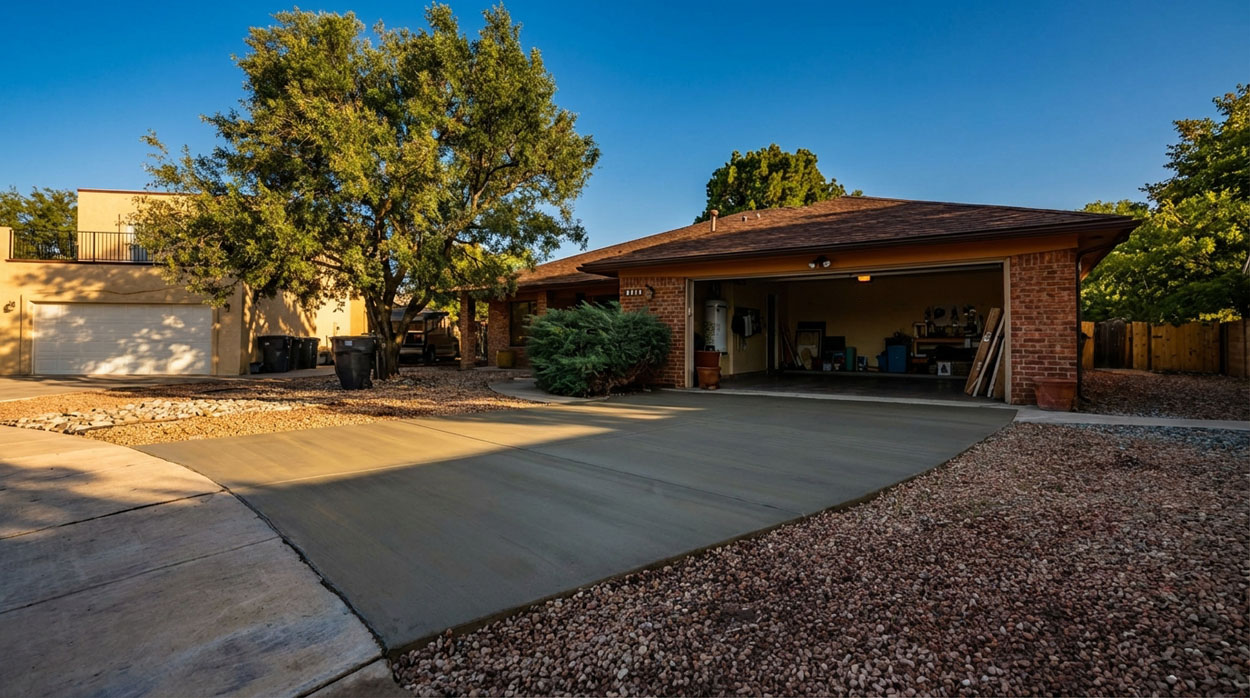 New residential concrete driveway pour in Rio Rancho
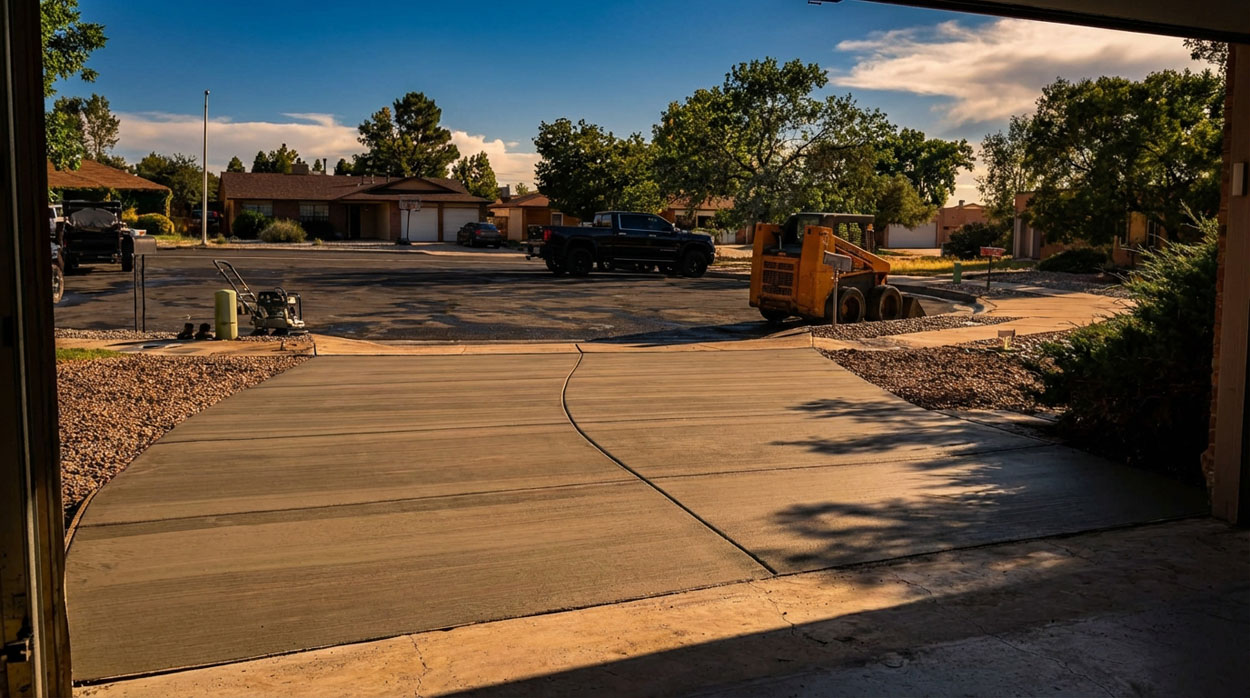 Finished residential concrete driveway in Albuquerque, NM
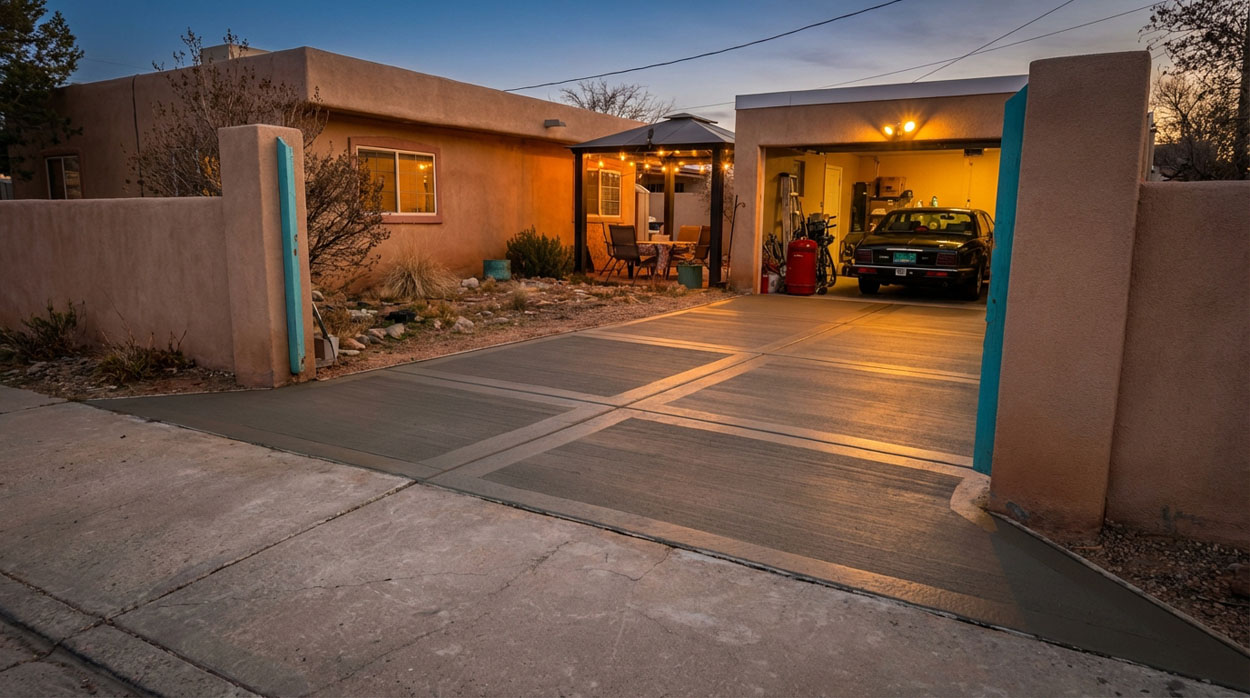 Concrete driveway for southwest-style home in Rio Rancho
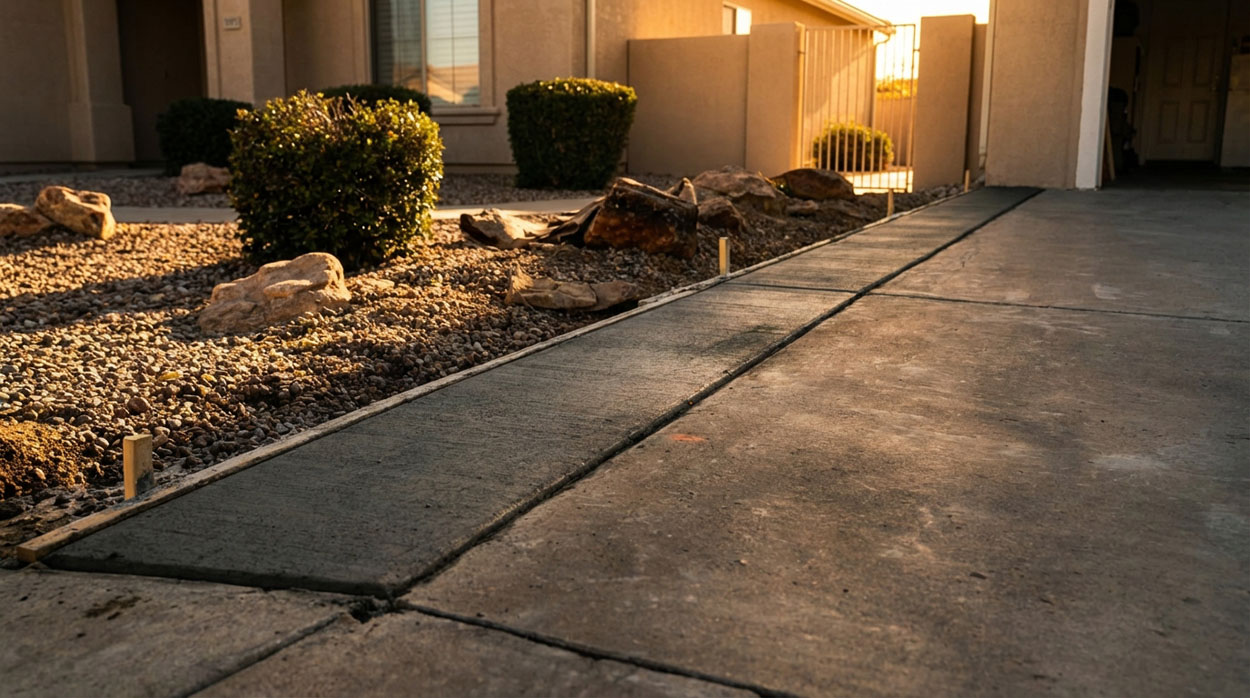 Concrete driveway widening and extension project
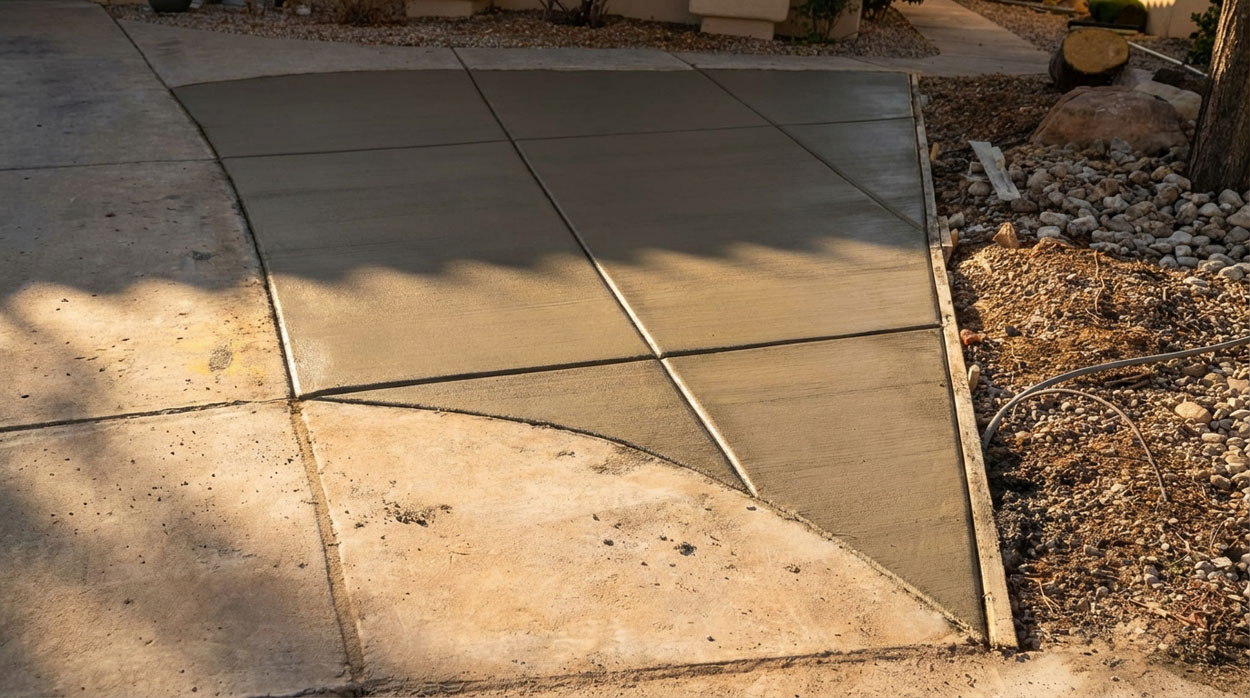 Fresh concrete driveway extension in Rio Rancho, NM
We've been working across the Albuquerque metro for years. In that time, we've learned that concrete work in this city is as varied as the city itself. A pour in the North Valley on saturated clay soil near the bosque is a completely different job than a hillside retaining wall in Sandia Heights or a production driveway in Ventana Ranch. We know which neighborhoods sit on caliche, which ones have expansive clay, and where the decomposed granite starts as you climb toward the Sandias. We schedule summer pours in the early morning to beat the heat, and we use curing compounds formulated for Albuquerque's low humidity. That kind of local knowledge is the difference between concrete that lasts 30 years and concrete that cracks in 5.
Pricing varies based on square footage, thickness, site access, demolition needs, soil conditions, and finish type. Albuquerque's varied terrain means site prep costs can differ significantly between neighborhoods — a flat West Side lot with caliche requires different preparation than a sloped foothills property on decomposed granite. We provide a detailed written estimate after an on-site visit.
Albuquerque has at least four distinct soil zones: clay-heavy alluvial soil in the North and South Valleys, sandy loam in the central city, volcanic basalt with shallow soils on the West Mesa, and decomposed granite in the foothills. Each type affects how we prepare the sub-base, what reinforcement we use, and how we manage drainage. Expansive clay in the valley areas can swell up to 10% when wet, which is the leading cause of slab cracking and heaving in those neighborhoods.
Yes. We serve all West Side neighborhoods including Taylor Ranch, Paradise Hills, Ventana Ranch, Seven Bar, Ladera, and the entire Coors/Unser corridor. We're based in Rio Rancho just north of the West Side and frequently work throughout this area.
Yes. Retaining walls are one of our core services, and the Sandia foothills — including Sandia Heights, Four Hills, and the High Desert area — frequently require them due to steep grades and elevation changes. We build engineered CMU block retaining walls designed for slope stability and proper drainage.
Monsoon storms from July through September deliver intense downpours that can wash out freshly poured concrete or erode sub-base material. We schedule pours around the monsoon forecast, protect fresh concrete from rain exposure, and engineer all flatwork with proper drainage slope so that monsoon runoff moves away from the slab rather than pooling against it.
Yes. We handle commercial flatwork including parking pads, sidewalks, building slabs, and loading areas for businesses throughout the Albuquerque metro. Contact us for a commercial estimate.
Call or text (505) 480-7542 for a free estimate on driveways, patios, slabs, block walls, stamped concrete, or demolition anywhere in Albuquerque. Over 20 years of experience across every neighborhood in the city.